
The Subscription Economy (2026)
Following an era of easy money in the 2010s, subscription businesses in 2026 are having to contend with fierce competition, increased scrutiny from lawmakers and consumer pullback.

A Brief History
DTC subscription brands were flush with cash in the second half of the 2010s. You remember the names. Dollar Shave Club, Blue Apron and HelloFresh to name a few. Money was easy, CAC was low and reaching customers online was cheap.
Unfortunately, all that glitters is not gold. Heavy first-order discounts and massive ad spend were not enough to retain subscribers. The moment Blue Apron IPO’d in June 2017, their future looked bleak. From the marked down opening price of $10 per share, to quotes of less than $1 less than two years later, the meltdown was obvious. Blue Apron became the poster child of a high churn subscription business that fizzled out.
Once COVID-19 lockdowns came around, subscriptions hit a turning point. Forced to be at home 24/7, consumers began activating subscriptions at a fiery pace. As the world opened back up a few years later, subscriptions were on the chopping block.
Businesses that stayed alive, changed for the better.
Trigger Finger
Despite the slowed growth trajectory, Shopify brands still have a lot to lean on. Perhaps the most important takeaway is a merchant’s job isn’t finished after a customer purchases a subscription. Value, and the cost underneath, must be consistently proven to be worth it. When a brand rests on their laurels, consumers sense it.
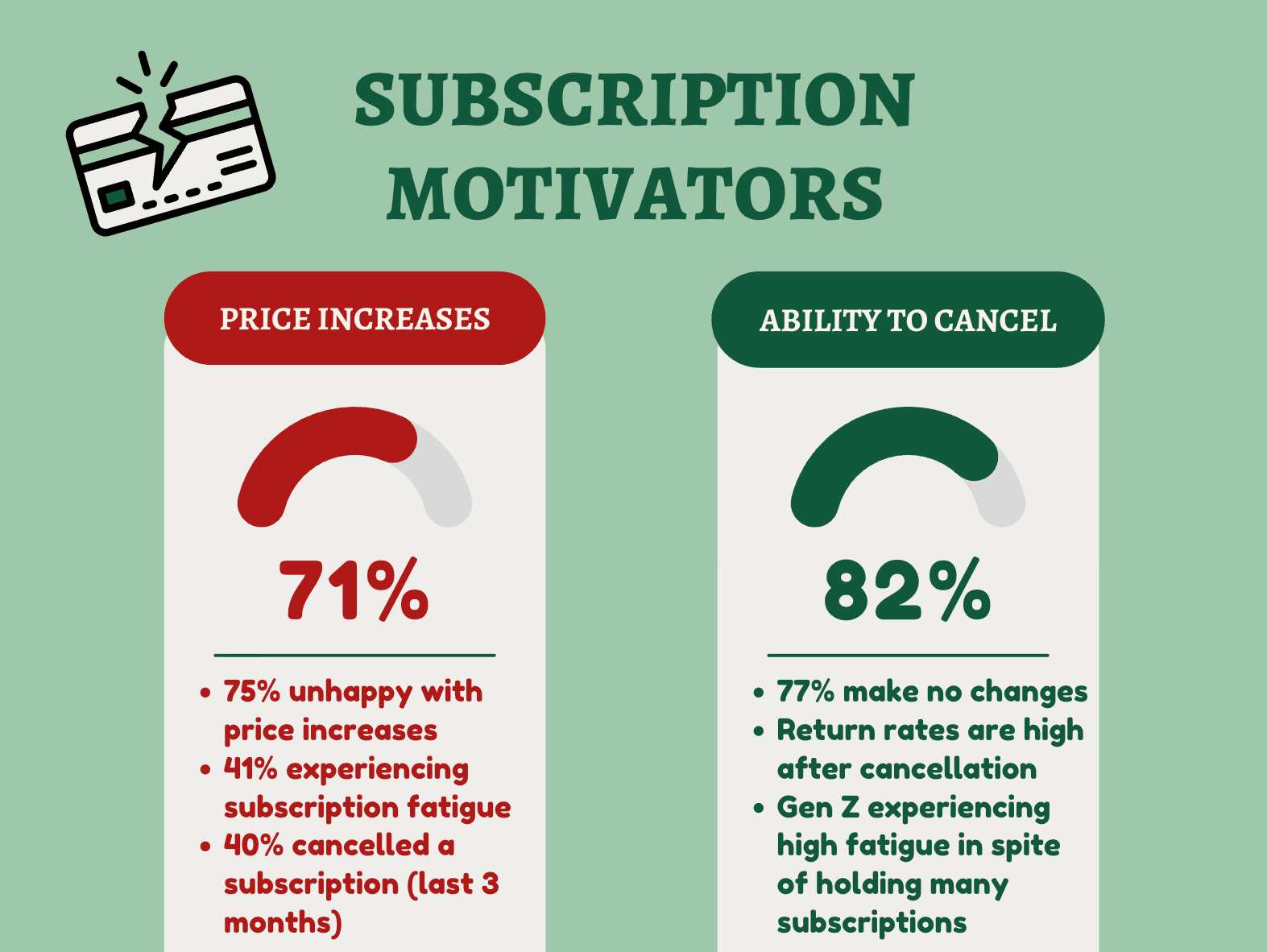
Playing defense requires focusing on two areas which drive an overwhelming majority of cancellations.
Price Increases
71% of subscription cancellations are tied to price increases. Before you increase prices, run the numbers and see if the additional revenue would make up for the revenue lost from churned subscribers.
Ability to Cancel
82% of consumers are more likely to subscribe when they know cancellation is easy. Reducing cancel friction, while counterintuitive, helps customers to not feel trapped. In order to work, this must be done effectively.


Relationship Timeline
Beyond initial activation, consistent maintenance of the subscriber relationship is how brands win.
First Month
Churn in the first 30 days is usually due to poor onboarding. Messaging, unboxing experience and value are the primary drivers of this type of churn. Brands must be proactive with subscribers to ensure they stay.
Middle Months
51% of subscribers who cancelled, state lack of usage as the reason for cancelling. In the second and following months, a consumer’s habits around your product, or lack thereof, will determine if they stay a subscriber. High churn in these months will tell you if you’re selling a novelty or consistent utility.
Later Months
12% of subscribers considering cancelling end up pausing instead. Churn this late into the subscription is typically a result of lower-priced competition, personal financial reasons or a better alternative. Allowing subscribers to take a break, in combination with rewards and win-back efforts, can help here. Subscription pausing is now widely adopted by both merchants and consumers, with a 337% increase in usage by subscribers.
Please Try Again
7.2% of churned subscribers did so because of failed payments. Don’t default to the assumption that a customer cancelled. Payment retries can save you here.
Getting Hitched
70% of merchants sell an annual subscription plan. Subscribers who pick the longer term option account for approximately 50 - 60% more revenue than their monthly counterparts.
Legal Landscape
The United States Federal Trade Commission (FTC) first adopted the Negative Option Rule in 1973. Since then, Section 5 of the FTC Act and Restore Online Shoppers’ Confidence Act have been enacted into law to combat bad actors. A handful of states, including California and New York, are leading the charge in their own right to enforce similar laws. California takes it a step further by mandating billing reminders and accessible, simple cancellation flows.
Across the Atlantic, the United Kingdom is working to save consumers a reported £400 million per year through new laws to protect them from subscription traps. Included in the regulation is a requirement for businesses to offer one-click cancellation.
Category Performance
Drill deeper into the trends and category insights from Recharge’s Subscription Trend Report.
Health
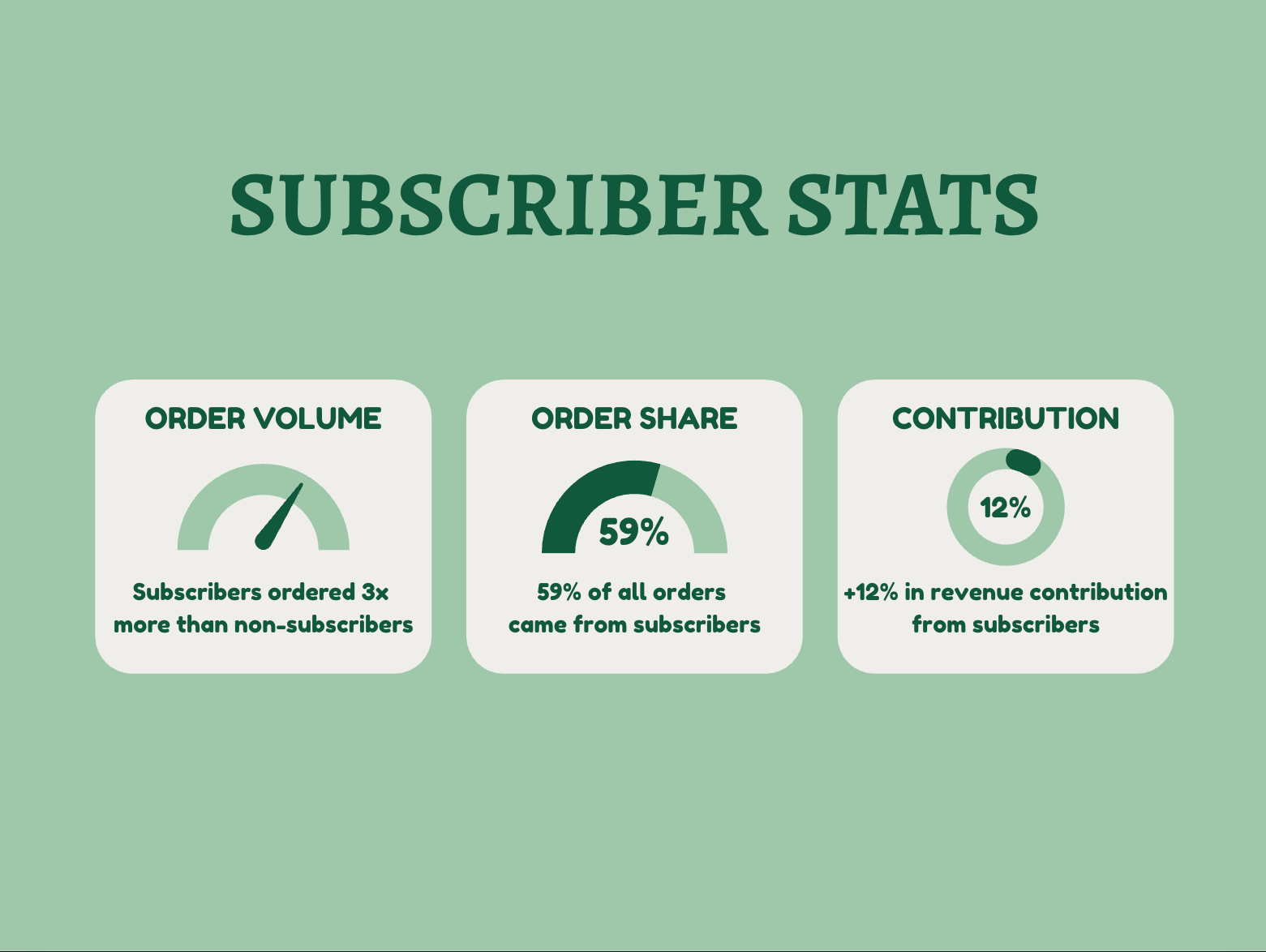
A category with lots of gas still in the tank, Health & Wellness saw growth across the board. Subscription checkouts, revenue share from subscribers and average orders per subscriber all increased in 2025. Consequently, churn saw a slight uptick and is the highest of all categories.
The biggest challenge for Health & Wellness merchants is turning intent at checkout to lasting habits. Consider a larger quantity in your product’s supply options or longer-term subscriptions (e.g. three months). Tracking and gamifying progress is another step towards reinforcing habit building around your product. Milestones, check-in rewards and progress trackers can be used as gentle redirects at pivotal points such as cancellation prevention.
Auri Nutrition was able to reduce churn by 21.4% and increase spend from rewarded customers by a multiple of 3.2. They did this with a punch card program embedded in their subscriber portal and rewarded customers at key markers (e.g. customer ordered three times). The portal itself became a retention mechanism because customers were able to track their progress easily.
Beauty
This category saw mixed results, with churn and subscription checkouts down, yet average orders per subscriber and subscriber revenue share up. Existing subscribers are driving most of the growth, while new shoppers are forgoing the subscription option. Beauty had the lowest share of checkouts with subscription of all categories in 2025.
Some of these trends can be explained by natural forces in the industry. New products and fads are introduced constantly, forcing consumers to shift along with them in order to keep up. It’s also incredibly hard for subscription renewals to align perfectly with real world usage. Brands can offer flexibility into their subscription management with shipment skips or product switches *before* the charge comes due. Update your pre-shipment email and SMS flows accordingly. Discounts, rewards and even free shipping, when shown at critical decision points can help strengthen your conversion.
Dermalogica increased subscriber conversion by a whopping 15%, simply by A/B testing updates to their subscription widget. Highlighting free gift value, expanded benefits and free shipping, returns, gifts and rewards in the widget, enabled the conversion lift.
Food & Beverage
2025 was a solid year for this category. Food and beverage saw increases in subscription checkouts, subscriber share of total revenue and average orders per subscriber, with churn decreasing substantially. The lifespan of a subscription is still the shortest amongst all categories.
Brands can improve their subscription offer and push it as the default at purchase. Review purchase flows and make subscribing easy. Given tastes can shift quickly, allow subscribers to switch flavors before their next shipment. Seasonal or exclusive drops and member benefits will help retain subscribers.
Oats Overnight has over 50 flavor options. They added a feature to collect feedback from customers in their account portal. Subscribers can rate and review flavors, which strengthens the feedback and product development loop for the team. Going above and beyond, Oats Overnight also added subscriber perks, access to exclusive flavors and quicker logins without a password. Combined, these changes drove an 82% increase in recurring orders and a 99% lift YoY in average orders per subscription.
To see more statistics and how the Home & Pet categories fared in 2025, check out the full report here.
Looking Ahead
In the past year, consumers went from holding an average of 4.1 active subscriptions to 2.8. 52% of consumers canceled a subscription in the last 12 months and 55% of Americans are not done cutting spending in 2026.
Shopify brands that want to drive more revenue through subscriptions must prioritize retention. Focusing too much on acquisition and too little on retention can lead to a similar fate experienced by many in the mid-to-late 2010s.
67% of consumers indicated they’re open to flexible pricing models. Usage based pricing and customizable add ons are areas to explore depending on the nature of your product and category.
43% of consumers are reportedly comfortable with AI-assisted subscription management. This would allow subscribers to pause, renegotiate and discover old subscriptions. AI’s ability to process large amounts of spread out data and present findings, is a boon to merchants as well. Tooling to monitor subscription churn is now fundamental to success.
25% of new sign-ups are win-backs where a customer returns. Ensure you’re collecting data on subscriber history and cancellation reasons. This data will allow you to structure a successful win-back program for customers.
Legal compliance isn’t just following the law, it’s a proxy for consumer trust. Potential subscribers are highly attuned to the traps set by bad actors and will only transact with brands that operate in good faith.
In Other News
Visa recently launched an Enhanced Subscription Manager, empowering consumers to keep track of their growing pile of billing commitments. Platform changes have the potential to shift consumers’ behavior around subscriptions.
Honda shot itself in the foot when they revealed an additional subscription for using garage buttons in newer models. Brands regularly capitalize on each others’ missteps. Remind your customers of how you provide value instead of engage in rent-seeking behavior.